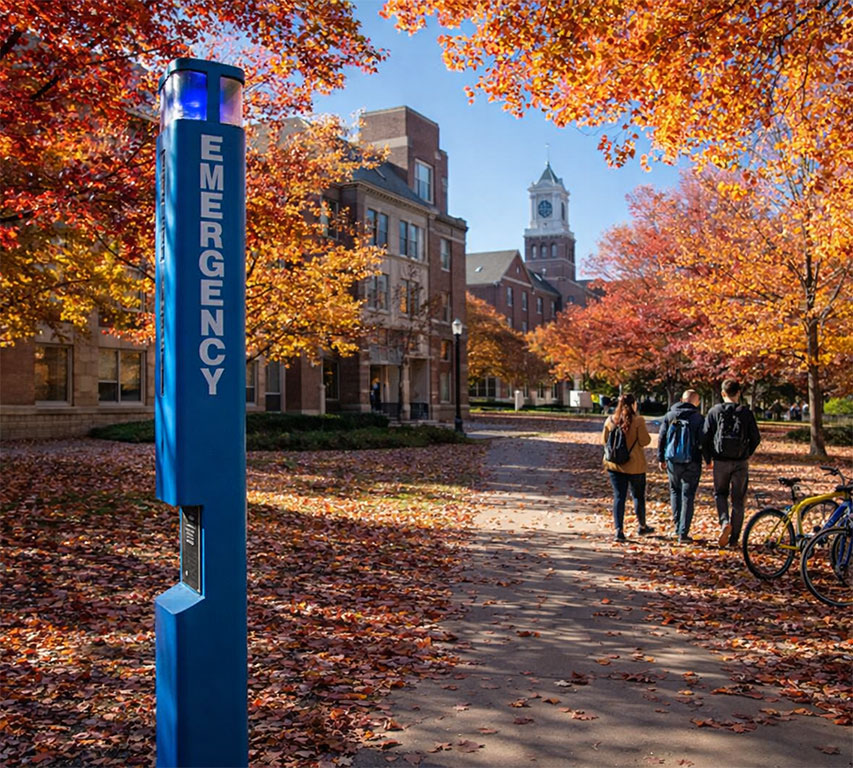
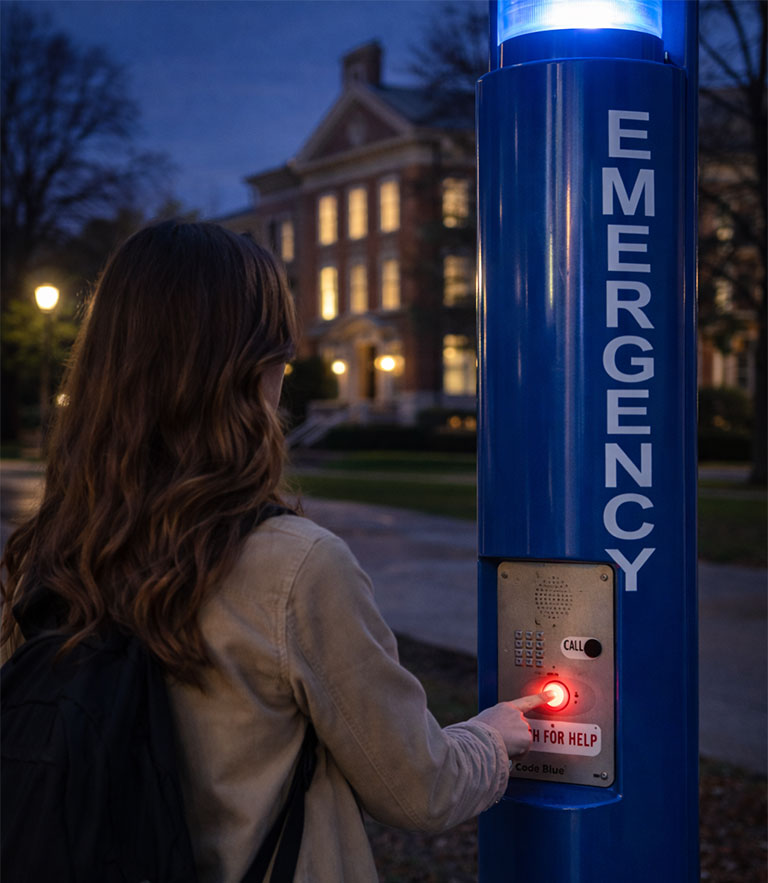





Cell phones can fail—dead batteries, poor signal, lost devices, or panic situations can prevent someone from calling for help. Blue light phones provide a reliable, fixed, highly visible emergency option that works even when mobile networks don’t. They also serve as a strong deterrent and boost perceived campus safety.
Blue Light
Emergency Phones
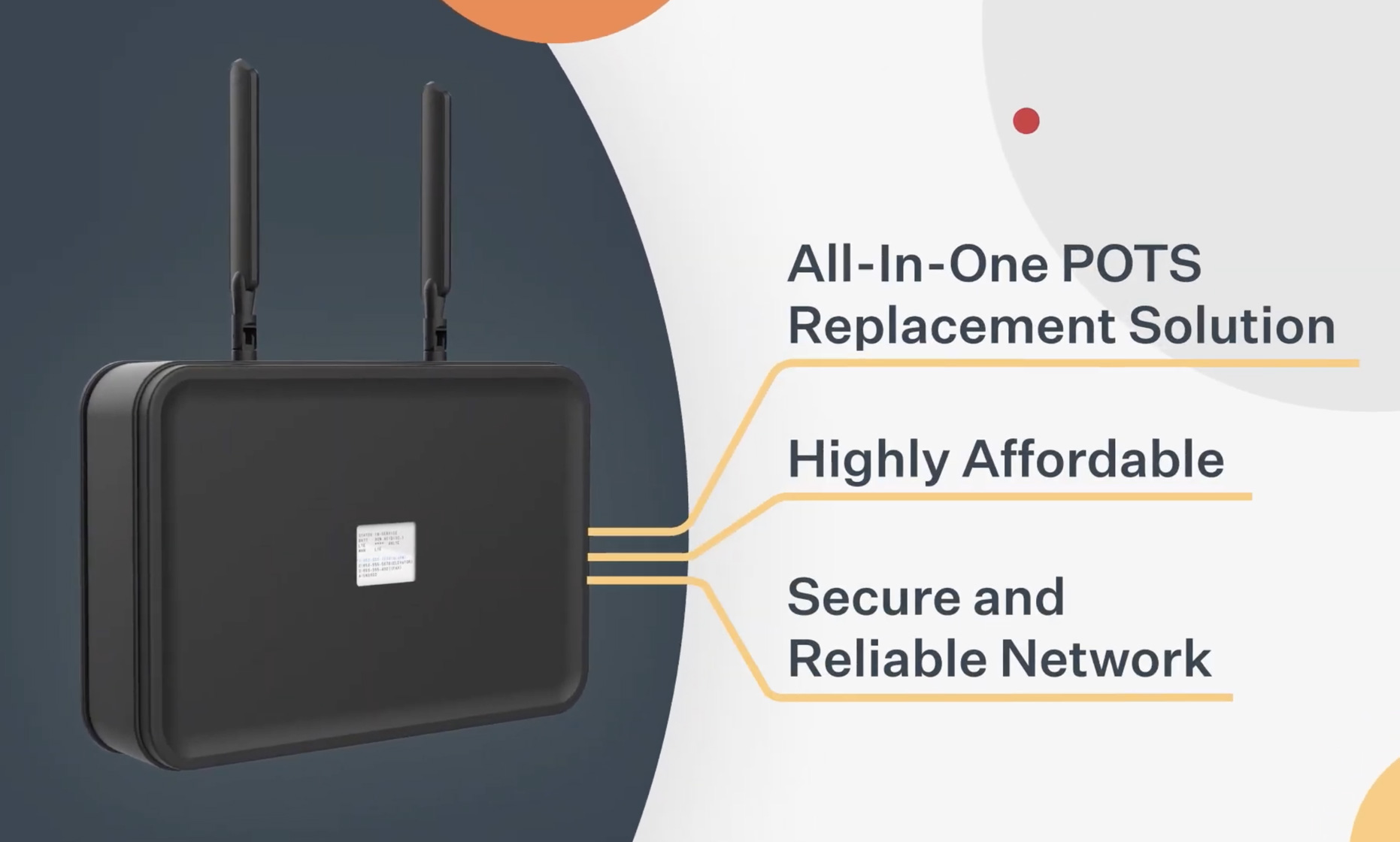
As copper POTS lines disappear, blue light emergency phones risk losing connectivity. Ooma AirDial® provides a reliable, turnkey POTS replacement solution that allows you to keep existing call boxes working without installing new wiring.
Why blue light emergency phones matter
Instant access to help
Blue light phones provide a direct, dedicated call path to campus security, police, or other emergency dispatch centers, often immediately tying into 911 or campus dispatch.
Visible deterrent against crime
The familiar blue tower on callbox signals that emergency services are just a button-press away, which can discourage criminal activity in dark or isolated areas like parking lots, paths, or wooded areas.
Reliability when cell phones may fail
Cell phones may be dead, out of battery, stolen, or out of signal. Blue light phones are particularly important in those cases — or when the caller cannot speak, but still needs help sent to that exact location.
Compliance & liability protection
Many institutions deploy blue light phones to meet campus-safety and public-safety obligations. Removing or decommissioning them could leave a campus or facility exposed to legal action.
Reassurance for student safety
Highly visible blue light phones provide peace of mind, signaling that help is always nearby. Their presence strengthens a campus’s safety reputation and boosts community confidence.
Future-proofing infrastructure
As technology and communication standards evolve, maintaining a dedicated, always-on emergency phone network ensures campuses stay compliant, prepared, and resilient—regardless of changes in mobile coverage.
AirDial provides e-911 accuracy when every second counts
Get help to the right place – immediately
Ooma AirDial pinpoints the exact device and port where an emergency call is placed, giving first responders precise location details so they can reach the caller faster.
Real-time awareness for every emergency call
AirDial’s Remote Device Management sends facility and safety managers SMS messages and email alerts whenever a blue light safety phone is used.
Typical use cases for blue light phones
Emergency phones are used in a variety of applications to provide ready access to help in the case of an emergency.
College & university campuses
Campuses often install blue light towers to meet campus safety policies; AirDial lets those towers stay fully functional even as copper lines are sunsetted.
Parks, trails & urban spaces
In areas without good cell coverage, or where users may not have a smartphone, blue light phones are a security anchor, and AirDial preserves connectivity.
Parking lots & garages
Remote or underground parking garages may have weak cellular signal or no safe cell coverage. Blue light phones remain a known, reliable emergency channel.
Transit stations, shuttle zones & remote facilities
AirDial ensures safety infrastructure stays online without costly rewiring and keeps coverage even if wired service is discontinued.
Maintain emergency phone compliance during the phase-out of copper lines
Ooma AirDial, the industry-leading POTS replacement solution, provides everything you need to replace copper phone light support for your blue light emergency phones.
More emergency phone resources
Blue light emergency phone service FAQs
Yes. Many universities maintain or expand blue light networks because they provide immediate access to help, meet accessibility needs, and reinforce a visible safety presence. They remain a core element of layered campus security strategies.
Traditional copper lines are being retired, and carriers are no longer required to maintain them. This puts analog emergency phones at risk of failure and cost increases. A POTS replacement solution like Ooma AirDial ensures continued, reliable connectivity without expensive infrastructure replacement.
No. AirDial allows existing analog blue light phones to continue operating normally. You avoid the cost and disruption of replacing towers, cabling, or analog devices.
AirDial supports compliance with requirements related to emergency communication system reliability, backup power, survivability, and availability. It helps campuses maintain standards that may reference NFPA 72, local building codes, and institutional safety guidelines.
AirDial includes battery backup and multiple connectivity pathways (LTE + ethernet), enabling emergency calls even during utility outages. This reliability is critical for emergency phones typically located outdoors or in remote areas.
Yes. AirDial provides remote monitoring and alerting, helping facilities and safety teams track device status, connection health, and power/battery levels across campus from a single dashboard.
No. AirDial can route calls exactly as they do today, whether to campus police, security dispatch, or local 911 centers. Transitioning is designed to be seamless to both callers and call recipients.
Deployment is straightforward and non-invasive. AirDial devices are installed near existing call boxes or in equipment rooms, without trenching new cables or replacing towers. Many institutions complete pilot installations in a single day.
Requirements vary by jurisdiction and institution. Some campuses install them voluntarily as part of safety commitments, while others may follow local codes, internal design guidelines, or accessibility mandates. Regardless, removing them can create liability concerns.
Visible emergency infrastructure strengthens the sense of safety for students and staff—and reassures parents during campus visits. A well-maintained blue light network can influence campus reputation and student satisfaction.
