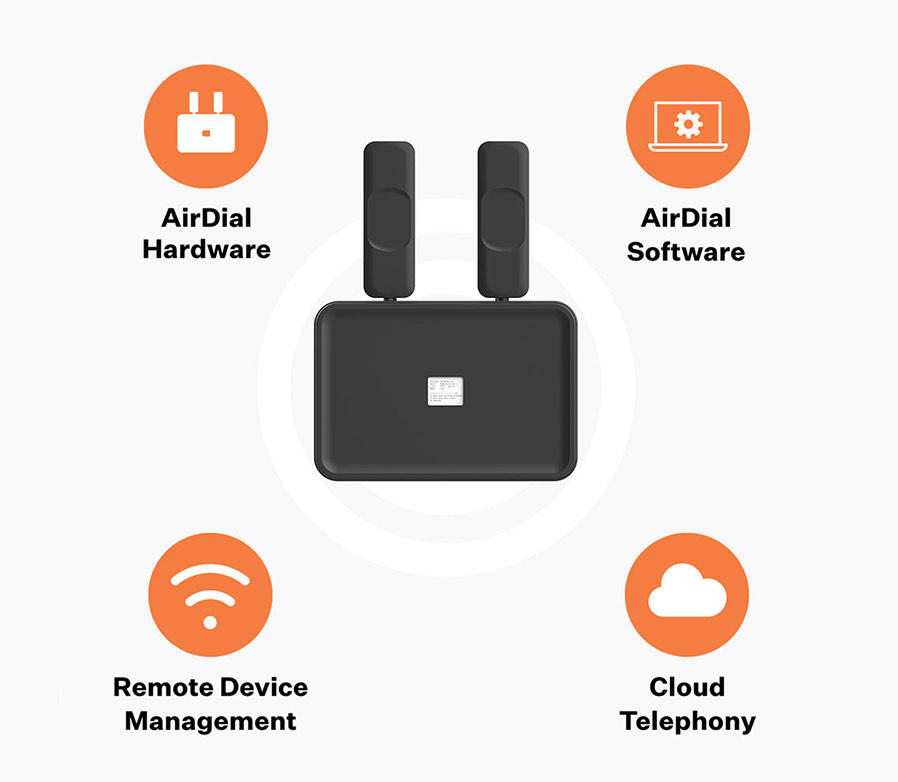
AirDial connects to existing POS devices, replacing POTS lines without hardware changes. It converts analog transactions into secure digital traffic and ensures continuous payment processing.
Point-of-sale (POS) Resources
Discover how Ooma AirDial® keeps transactions running smoothly while maintaining reliable payment connectivity.
Risks of POS systems going offline:
Lost revenue as
transactions fail.
Sales stop immediately when payments can’t be processed, directly impacting top-line revenue.
Checkout delays &
cart abandonment.
Long lines and stalled checkouts frustrate customers, leading to walkouts and lost sales.
Unattended systems
go offline.
Self-service stations, ticketing machines, and pumps become unusable without connectivity.
Backup dial lines fail.
No fallback processing.
Legacy POTS-based backups no longer work, removing a critical safety net during outages.
Limited visibility &
slow issue resolution.
Lack of real-time monitoring can delay detection and extend downtime.
Manual workarounds
increase errors & costs.
Staff must revert to manual processes, slowing operations and increasing the risk of mistakes.
Prevent payment disruptions with reliable, always-on connectivity.
AirDial supports existing analog POS devices, eliminating the need for costly terminal replacements. Centrally monitor line status, activity, and alerts across every location from a single dashboard.
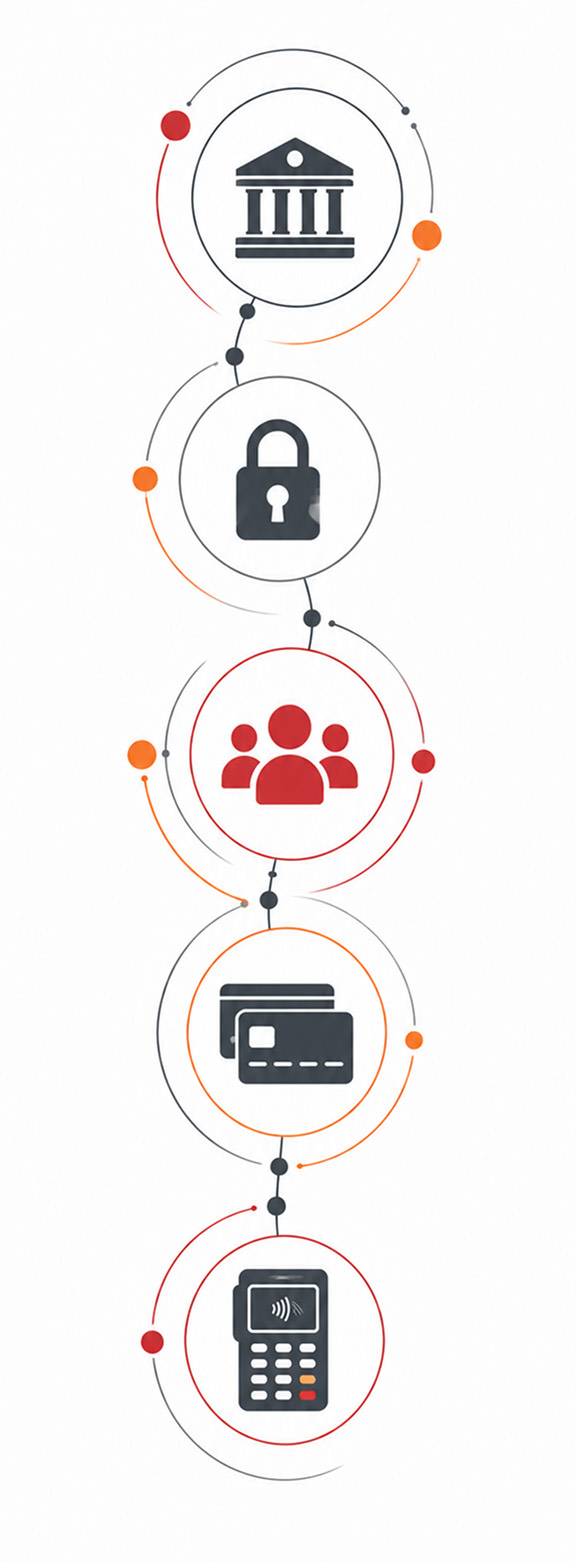
Governing bodies for POS systems
Government & Regulatory Bodies
Government agencies enforce consumer protection, data privacy, and financial regulations, ensuring POS systems meet legal requirements for security and compliance.
Hardware & Security Certification Bodies (e.g., UL, PCI-PTS)
Certification bodies validate that POS devices meet strict security standards, ensuring terminals can securely process transactions and protect against tampering and fraud.
Payment Card Industry Security Standards Council (PCI SSC)
PCI governs POS security by defining how payment data is stored, processed, and transmitted. Through standards like PCI DSS, it ensures cardholder data is protected across all transactions.
Payment Processors & Acquirers
Processors and acquiring banks connect POS systems to payment networks, certifying environments, enforcing compliance, and enabling transaction authorization and settlement.
Payment Networks (Visa, Mastercard, American Express, Discover)
Payment networks define how transactions are authorized, processed, and settled, enforcing compliance and determining whether POS systems can participate in the payments ecosystem.
EMVCo (Chip & Contactless Standards)
EMVCo sets global standards for secure card-present transactions, defining how chip cards and terminals interact to prevent fraud and ensure consistent payment experiences.

Ooma AirDial POS System Resources FAQs
Yes. AirDial works with existing analog POS devices, allowing organizations to modernize connectivity without replacing terminals.
AirDial provides redundancy, battery backup, and real-time monitoring, eliminating single points of failure.
Yes. Replacing POTS lines reduces monthly costs and eliminates unpredictable price increases.
Yes. AirDial replaces dial-up backup lines, ensuring transactions continue during outages.
Yes. AirDial supports kiosks, ticketing machines, and fuel pumps with reliable connectivity.
AirDial maintains or improves transaction performance compared to legacy POTS lines.
Yes. It scales easily across locations with centralized visibility.
No. AirDial operates at the connectivity layer, so existing workflows remain unchanged.
AirDial supports a wide range of analog-based POS devices and legacy terminals.
AirDial provides secure, monitored connectivity that supports modern compliance requirements including PCI.
Yes. AirDial supports high transaction volumes with reliable connectivity.
AirDial includes battery backup to maintain connectivity during short outages.
Yes. Many POS systems still rely on POTS lines for dial-up transactions or as backup connectivity when primary networks fail.
POS systems can lose their backup connection, leading to failed transactions, offline terminals, and service disruptions.
Yes. Even modern systems may depend on POTS for failover, creating hidden risks if those lines are removed.
You can review telecom bills and audit connected devices to identify where POTS lines are still in use.
Legacy terminals, backup dial lines, kiosks, fuel pumps, and multi-location deployments are most affected.
Risks include failed transactions, lost revenue, poor customer experience, and unexpected outages.
No. With proper planning, replacement can be done with minimal disruption to daily operations.