AI as the calm during peak chaos
 | May 29, 2026 | 7 min read |
Key Points
- Most customers won't leave a voicemail and often call a competitor instead.
- Responsiveness is a major factor in customer satisfaction and retention.
- Peak demand creates communication bottlenecks across many industries.
- AI Answering Service helps manage missed calls and routine inquiries.
- The goal is to support staff and improve availability, not replace people.
Most businesses don’t lose customers because they offer poor service, they lose customers during moments of operational overload.
The restaurant that can’t answer the phone during the dinner rush.
The HVAC company flooded with emergency calls during a heat wave.
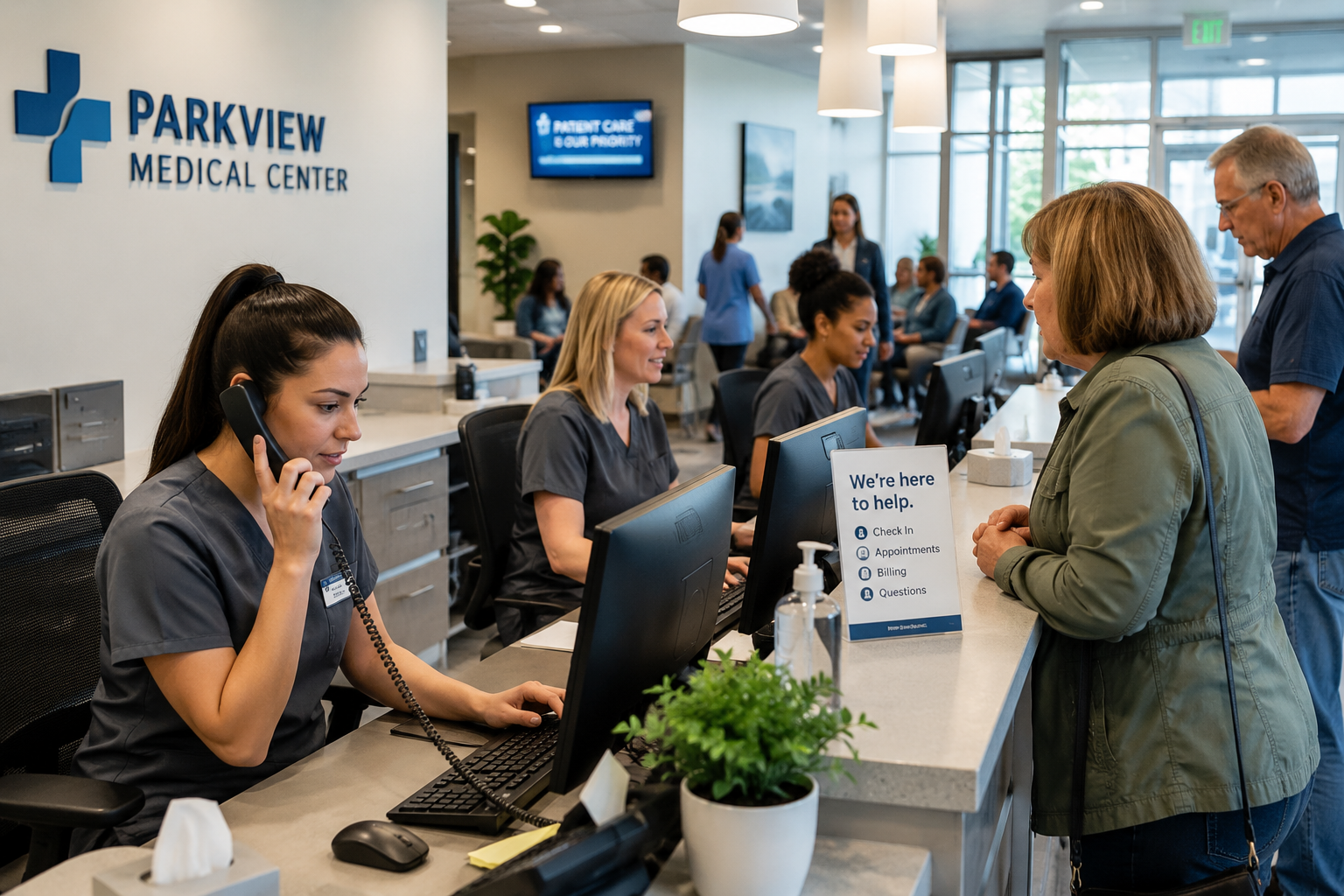
The medical office overwhelmed on Monday morning.
The retailer trying to keep up during the holiday rush.
In each case, the issue isn’t demand: It’s bandwidth. And increasingly, businesses are discovering that communication breakdowns happen precisely when responsiveness matters most.
That’s where AI Answering Service fits in.
Not as a replacement for employees, not as a futuristic AI experiment, but as a practical way to help businesses stay responsive during busy periods, after-hours spikes, and moments when staff simply can’t answer every call.
The hidden problem with voicemail
Many businesses still think of voicemail as a backup plan. The problem is that most customers no longer see it that way.
According to Capture Client research, roughly 80% of callers who are sent to voicemail hang up without leaving a message. In urgent situations, customers often move directly to the next business instead.
Part of that behavior is practical. People want fast answers. But part of it is psychological as voicemail creates a feeling of uncertainty. Customers don’t know when they’ll hear back, whether their message will be prioritized, if they’ll miss the callback later, or whether anyone will respond at all.
And in stressful situations, uncertainty feels frustrating. When someone’s air conditioning fails during a heat wave or a customer needs a same-day reservation, leaving a voicemail doesn’t feel like progress. It feels like a delay.
That’s especially true for younger consumers who have become accustomed to real-time communication through text, chat, and instant responses. The businesses winning today are often not the ones with the most staff, they’re the ones that make customers feel acknowledged quickly.
Availability has become part of customer experience
Customers don’t separate communication from service. If they can’t easily reach your business, they often assume the experience afterward will be equally difficult.
This is especially true during high-pressure moments when customers are already stressed, rushed, or trying to make fast decisions. Availability is a competitive advantage.
Decades of customer service research have shown that responsiveness is one of the primary ways customers evaluate service quality. In the widely used SERVQUAL framework, responsiveness is defined as the willingness to help customers promptly and provide timely service.
Businesses that respond quickly are often the ones that win the customer, even when competitors offer similar pricing or expertise. This communication gap is easily felt by customers in industries where those high-pressure moments are commonplace, where demand spikes, customer urgency is high and operational pressure is constant.
Where operational chaos shows up most
Every industry experiences communication overload differently, but the underlying challenge is often the same: customers expect immediate responsiveness during the exact moments businesses are busiest.
That’s where missed calls, voicemail abandonment, and operational stress start to compound. Here’s how that dynamic plays out across different industries.
Restaurants during the dinner rush
Restaurants are one of the clearest examples of peak operational chaos. During service hours, staff are focused on greeting and seating guests, taking online orders, coordinating with the kitchen and assisting with deliveries and pickups.
Meanwhile, incoming calls continue nonstop with reservation requests, takeout questions, catering inquiries, and customers asking about wait times.
Every interruption pulls attention away from the dining experience. But every unanswered call also creates friction for the customer on the other end. Most callers don’t know whether the restaurant is too busy to answer, understaffed, or simply ignoring the call. All they experience is uncertainty and frustration.
That frustration, especially for a person who might be hungry and just wants a meal or to book a reservation for a special event, just means they’ll try another restaurant on their list.
Missed calls can mean missed revenue of about $27,000 a year, according to Washington Hospitality Association. In an industry with already thin margins, that can be a significant amount of money lost. Not to mention the loss of customers who leave with a sour taste in their mouth.
AI Answering Service helps reduce that friction by responding to missed calls, answering common questions, and capturing caller information for follow-up.
That consistency matters more than many businesses realize. Customers may forgive a busy restaurant. What frustrates them is feeling invisible.
HVAC companies during heat waves
For HVAC companies, responsiveness directly impacts revenue. When temperatures spike and HVAC systems overload, call volume often surges at the exact moment office teams become overwhelmed. Technicians are already dispatched, incoming requests pile up, and after-hours calls increase dramatically.
In these situations, the first company to respond often wins the business. That’s because urgency changes customer behavior.
Someone dealing with a broken AC system in extreme heat is far less likely to leave a voicemail and wait patiently for a callback. They want reassurance that someone is available and ready to help.
Customers will just call the next HVAC company instead, and every missed call is a missed sales opportunity. Those missed opportunities can quickly compound, potentially missing out on thousands of dollars in sales and repairs.
AI Answering Service helps businesses maintain that sense of responsiveness by:
- Answering missed calls
- Providing business information
- Flagging urgent requests
- Capturing caller details
- Generating summaries for follow-up
The goal is not to automate the customer relationship. It’s to eliminate communication dead ends during high-pressure moments.
Medical practices and front desk burnout
Healthcare offices face a different kind of communication pressure. Front desk staff are constantly balancing patient check-ins, scheduling, insurance questions, prescription requests, and ringing phones all at once. Monday mornings are especially difficult because call volume spikes after weekends.
Over time, that level of interruption creates operational fatigue. Research on workplace interruptions has found that constant disruptions are among the most common sources of employee stress and can contribute to slower response times, reduced productivity, and burnout over time.
One of the most overlooked benefits of AI answering tools is not just efficiency. It’s focus preservation.
When repetitive inquiries are handled consistently, staff can spend more time on conversations that require empathy, judgment, and direct human attention. That distinction matters in healthcare as so many patients are calling in with anxiety about their conditions or potential conditions.
The more time staff have to focus on patient concerns and emotional reassurance, the better the experience becomes. Strong AI implementation doesn’t necessarily remove the human side of service, in this case it can protect and enhance it.
Retail during the holiday rush
Retailers experience similar challenges during seasonal peaks.
Holiday shopping periods bring sharp increases in customer questions about shipping timelines, inventory availability, return policies, and store hours. Even well-staffed teams struggle to keep up with the volume.
Historically, businesses accepted that communication quality would decline during these periods. Long hold times and missed calls were treated as unavoidable. However, long hold times just frustrate customers who wonder whether visiting the store themselves would have been easier rather than listening to non-stop ringing or getting sent to voicemail.
AI Answering Service gives businesses a way to maintain responsiveness during demand spikes without requiring every call to be handled live by staff. That operational consistency becomes especially valuable when teams are already stretched thin, as you can use the answering service to take care of quick queries like store hours or return policies.
The bigger opportunity: Reducing interruption overload
Much of the public conversation around AI focuses on automation. But for many small businesses, the more immediate problem is interruption overload. Operational chaos is often caused less by workload itself and more by constant interruption. Research led by UC Irvine professor Gloria Mark found that after an interruption, workers can take more than 20 minutes to fully regain focus.
Teams constantly shift between:
- Customer conversations
- Administrative work
- Incoming calls
- In-person service
- Urgent requests
Team members are being versatile, but all that work causes fragmentation that affects both productivity and customer experience.
AI Answering Service helps reduce some of that pressure by handling missed-call coverage, after-hours inquiries, FAQs, and routine customer interactions consistently. That allows employees to stay focused on higher-value work instead of constantly reacting to communication bottlenecks.
The Future of Customer Communication Is Responsiveness
The businesses that succeed over the next decade likely won’t be the ones that automate everything. They’ll be the ones that use tools to remain reliably responsive, even during moments of pressure. That’s the real value of AI Answering Service.
Not replacing people.
Not eliminating human interaction.
Not turning every customer interaction into automation.
But helping businesses stay available, responsive and reassuring when things get chaotic.

Learn more about how Ooma Office can help your business.
Thank you!
An Ooma Office Sales Representative will be in touch shortly.
866-573-0707


Learn more about how Ooma Office can help your business.
Just call 877-621-0515 or click this to CHAT. Or, fill out this form and someone will reach out to you shortly.
Mark Vogel, Director of Product Marketing for Ooma, Inc., is an accomplished marketing leader with 12 years of experience in high-growth SaaS, AI and CX industries. He specializes in transforming customer experiences and driving business success through innovative technology solutions.