How healthcare facilities roll out POTS replacement without disrupting operations
 | June 15, 2026 | 5 min read |
Key Points
- Healthcare facilities often depend on legacy POTS lines for elevator phones, fire alarms, security systems, and backup nurse call systems.
- A successful POTS replacement project begins with auditing and documenting all analog devices and copper line dependencies across each facility.
- LTE-based POTS replacement solutions allow organizations to modernize communications without replacing existing devices or infrastructure.
- Remote device management enables healthcare IT teams to monitor, test, and scale deployments building-by-building with minimal operational disruption.

Healthcare facilities are filled with advanced communication systems meant to keep people connected. They’re also designed with multiple layers of communication to make sure people are still always connected.
Building and maintaining these systems is a complex, long-term process, often decided from the building of the facility in the first place. However, your healthcare facility also has some legacy technology that may need replacing: outdated and increasingly expensive Plain Old Telephone Service (POTS) copper wires.
Those POTS lines power essential communication services, from backup nurse call system lines to elevator phones. However, this creates a set of parallel communication systems you need to manage: the internet and phone lines you use daily to keep patients, healthcare workers and facility connected and operating, and the systems that are mostly used to non-healthcare related building operations that are still critical.
That second tier is where you’ll find your POTS lines, and identifying and replacing them with modern technology can be challenging. In this post we’ll go over how to identify which POTS lines need replacing and how to efficiently phase a rollout.
The difficulty of scaling POTS replacement across healthcare facilities
Hospitals and other healthcare facilities can be a massive series of buildings that are best described as a campus. One of the complications of building them is the healthcare technology that needs to be distributed across multiple buildings.
You need infrastructure that is capable of supporting surgery, keeping patients overnight, check-ups, various specialties like x-rays, blood testing, vaccinations, administration and more. In maintaining and monitoring all of those essential systems that keep the healthcare system afloat, there is a secondary system that is running things like elevator phones, fire alarms, nurse backup call systems, security alarms and building-entry panels. Those are powered by legacy copper phone lines.
Those systems, while important, aren’t exactly front of mind in facilities designed around healthcare. On top of that, each building likely has its own central hub for POTS lines, meaning that if you’re looking to modernize your hospital campus you need to modernize building by building systematically.
All of this makes scaling extremely difficult.
Start with an audit of hidden analog dependencies
The first thing you need to do is find all those devices and pieces of infrastructure that rely on copper phone lines. Many healthcare organizations don’t know how many analog endpoints they have until they begin the audit process. There are a number of ways you can do this. The first is to take a look at any documentation you may have about the facilities.
There may already be a log of all devices that use POTS lines. Ideally, this documentation would be categorized by building. For instance, Building A uses copper phone lines for these devices, and then detail where those devices were and which electrical closet they had lines running to.
If there is no current log of every POTS device, you may want to refer to blueprints and other construction documents the healthcare facility has in its possession to help identify all possible copper line dependencies.
Otherwise, you’ll need to make manual checks throughout each building to see which devices you have. You can do this by going from each electrical or communication closet in each building, seeing where your copper phone lines are stored and what devices they lead to.
This can be a time intensive process because most hospitals have dozens of POTS lines. In a wider healthcare facility campus, this number can rise to hundreds. Large healthcare organizations often have extensive inventories of legacy systems and endpoints spread across multiple facilities, making discovery and modernization projects especially challenging. According to a HIMSS survey, 73% of healthcare provider organizations still operate legacy information systems.
Modernizing without replacing all your devices and infrastructure
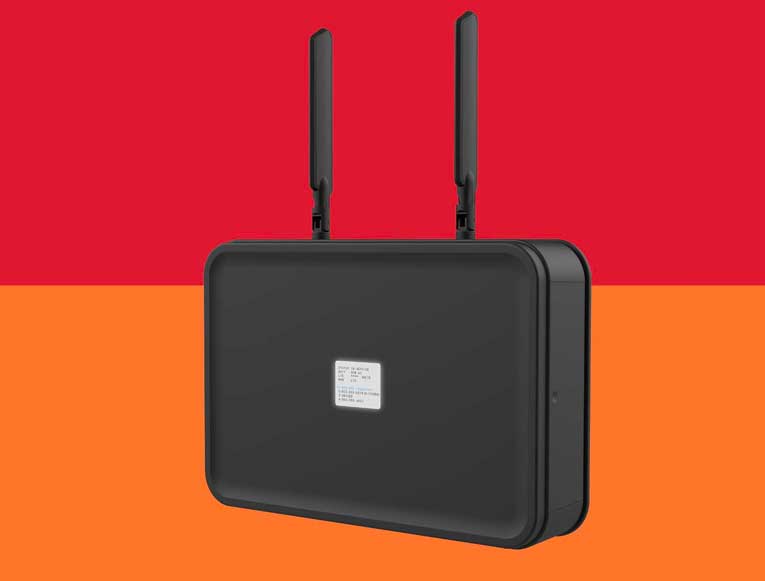
Once you identify all the POTS lines you’ll need to replace it’s time to actually do it. Luckily, POTS replacement devices like Ooma AirDial make this process simple. That’s for two reasons: One reason is that POTS replacement devices essentially use an LTE cellular signal or an Ethernet connection to replace the copper phone line service. Your device will continue working without missing a beat.
More importantly, systems like Ooma AirDial® have features like Remote Device Management. This means that you can remotely monitor all the devices in a single facility, testing its capabilities and making sure things work out before rolling out replacements at other healthcare facilities.
Because you can systematically install them building-by-building and continually monitor them from a single source remotely, you can better plan your rollout. You can start with buildings that are frequented less, giving you more room to test and evaluate.
Once it passes those tests, you can start upgrading facilities nearby and moving through the campus at a pace your IT team is comfortable managing. All the power is in your hands, taking what can be a very overwhelming process and simplifying it. Even better, installing Ooma AirDial is simple: you can either do it yourself or have Ooma do it for you.
Here’s how it would work. Let’s say you run a massive healthcare facility with two parking garages, one main hospital building, an urgent care facility and a cancer center. The garages have four elevators, each with its own elevator lines powered by POTS, plus blue light phones and fire alarms. The buildings have even more elevators and fire alarms, plus nurse backup systems. All in all, let’s assume around 70 POTS-powered devices – with 7 of those in the garage alone.
For this rollout, it would be best to start the rollout with the parking garages because they see less foot traffic. Once the parking garage is rolled out, you can move on to the cancer center or main hospital building, slowly rolling out your replacement solution as you go. As you go, you can check on their status via Remote Device Management. Those 70 POTS devices, once overwhelming, are much easier to manage now.
Modernization without disruption
Modernization is a key trend in the healthcare industry, with many hospitals increasing spending to improve patient experience scores, according to LinkedIn News. That means spending big money on facility upgrades.
This all means that you have enough to worry about when managing IT at a healthcare facility. From managing multiple internet providers to making sure the multiple cellular networks operating in your facilities are working to pager systems, email and cloud services, administration and more, the last thing you want to worry about is a complicated rollout to modernizing elevator phones, fire alarms and other communication systems.
Services like Ooma AirDial make that transition easy, allowing you to easily prioritize certain facilities and scale at a pace that works for you. You’ll modernize your systems without risking disruption and, most importantly, not steal away focus from everything else
In the end, you will find that you are able to save money on those POTS lines that can support other patient care initiatives.

We’ll follow up within a business day.

We’ll help you analyze whether Ooma AirDial is a good solution for your needs.

A custom quote will be generated.
Tonya Hottmann is the director of marketing for Ooma AirDial. She has 20 years of experience in demand generation, growth marketing and product launches, including 10 years in the telecommunications industry.



Still using POTS lines?
See where they still support critical systems.
Call sales at:
866-902-6765
Thank you!
An Ooma AirDial Sales Representative will be in touch shortly.
866-839-5810



Check your POTS Line Readiness
Download the checklist to review your active POTS lines and connected systems.