Thank you!
An Ooma AirDial Sales Representative will be in touch shortly.
866-839-5810



Get your custom quote.
Let’s talk and see how much you can save with Ooma AirDial.

We’ll follow up within a business day.

We’ll help you analyze whether Ooma AirDial is a good solution for your needs.

A custom quote will be generated.

Generate Your Personalized POTS Line Replacement Business Case
Get the information needed to build your case for POTS replacement. Create a customized business case document that shows how much your organization can expect to save by replacing POTS lines with Ooma AirDial.
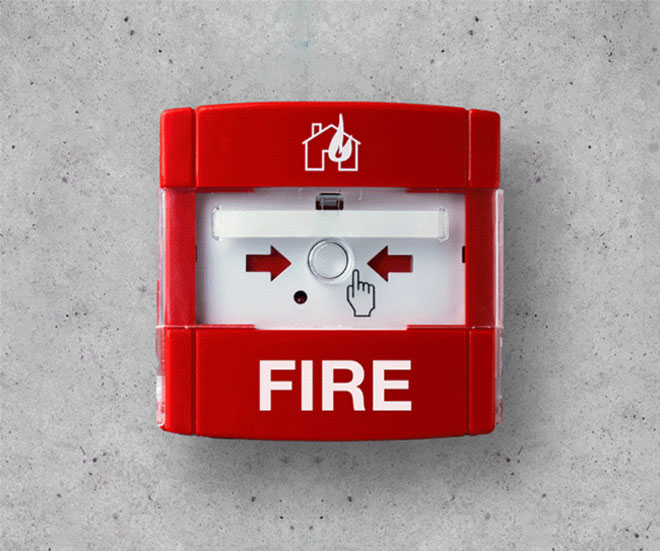
Still using POTS lines? See where they still support critical systems.
Check POTS ReadinessCall sales at:
866-902-6765
What does a carrier modernization notice mean?
Author: Kathy Mazza
Key Points:
- A network modernization notice may indicate that copper-based service at one or more locations is being migrated or discontinued.
- Review the notice carefully for affected addresses, telephone numbers, deadlines, and replacement services offered by the carrier.
- Trace every listed number to its connected device, especially fire alarms, elevator phones, security systems, and entry systems.
- Life-safety systems may require more planning than ordinary business phones because contractors, monitoring providers, testing, and AHJ approval may be involved.
- Starting immediately gives your organization more control over the migration and reduces the risk of outages or compliance gaps.
If you have received a letter from AT&T or another carrier containing terms such as “network modernization,” “copper retirement,” or “service discontinuance,” do not treat it like routine account correspondence.
The notice may mean that one or more copper-based services at your location will be migrated, changed, or discontinued. It should identify the affected services, the carrier’s proposed timeline, and the actions your organization may need to take.
Here is what the notice means, what could happen if you do nothing, and what to do next.
What is a carrier network modernization notice?
A carrier network modernization notice is a formal communication explaining that the carrier is changing the infrastructure used to deliver service at a particular location.
Depending on the carrier and the type of notice, the change may involve:
- Retiring copper facilities.
- Moving customers to fiber, wireless, or IP-based service.
- Discontinuing a particular legacy service.
- Replacing older network equipment.
- Requiring customers to select a new service before a stated deadline.
The letter may identify the affected service address, telephone numbers, planned implementation or discontinuation date, and alternative services offered by the carrier.
Is it a legal notice?
Some modernization letters are formal notices issued as part of a regulated copper-retirement or service-discontinuance process. Others are customer migration communications sent before or alongside the carrier’s formal regulatory filings.
The applicable notice period is not identical in every situation. It can depend on the type of network change, whether customers are still using the copper facilities, state requirements, and the carrier’s service terms.
For that reason, your organization should rely on the dates and instructions in the specific notice rather than assuming that every carrier must provide the same amount of time.
Regardless of the exact regulatory classification, a letter containing a service deadline should be treated as an operational priority.
Why do carriers call it “modernization”?
Carriers use the term modernization because they are replacing aging copper infrastructure with newer fiber, wireless, and IP-based networks.
AT&T, for example, says it plans to exit its copper network in the majority of its wireline footprint by the end of 2029. Other carriers are also moving customers away from legacy copper services as they invest in newer infrastructure.
From the carrier’s perspective, this is a network upgrade. From the perspective of a building owner, the practical question is whether the replacement service will support every device currently connected to the affected lines.
What happens if you do nothing?
The consequences depend on which devices are using the affected telephone lines.
Business phone lines
Employees may no longer be able to make or receive calls once the legacy service is discontinued.
Fire alarm panels
A panel may lose its communication path to the supervising station. This can create an impairment that requires immediate coordination with the monitoring provider, fire alarm contractor, and AHJ.
Elevator emergency phones
The emergency phone may no longer connect to an authorized answering location, potentially affecting inspection status and elevator operation.
Security alarm panels
Alarm signals may stop reaching the monitoring center, leaving the property without the expected level of monitoring.
Building entry and gate systems
Visitors may no longer be able to reach tenants, security personnel, or a remote access-control service.
Once facilities are physically retired, restoring the same copper-based service may no longer be possible. Even when a temporary extension or alternative is available, organizations should not assume the carrier will preserve the original service indefinitely.
What does the notice window mean in practice?
For ordinary business voice lines, the available notice period may be enough time to migrate to a cloud or IP-based phone service.
Life-safety and building systems often require a more involved process.
Fire alarm panels
A fire alarm migration may require an assessment of the existing panel and communicator, confirmation of the signaling method, coordination with the monitoring provider, installation by a qualified contractor, end-to-end testing, documentation, and AHJ review.
Elevator emergency phones
An elevator phone migration may require coordination with the elevator service company, verification of location identification and two-way communication, backup power testing, monitoring updates, and inspection approval.
Security alarm panels
A security system migration requires confirmation that the panel is compatible with the replacement communication path and that the monitoring center is receiving every required signal.
Organizations that begin as soon as a notice arrives have more time to coordinate these steps. Waiting for a follow-up letter or the actual service interruption increases the risk of emergency work, failed inspections, fire watch, or equipment being taken out of service.
What should you do right now?
Three actions should happen as soon as the notice arrives.
Identify every connected device
Review every telephone number listed in the notice and trace it to a physical device, system, and location.
Prioritize critical systems
Address fire alarms, elevator phones, security systems, emergency phones, and other regulated applications before general voice lines.
Begin the migration immediately
Use the deadline in the notice to build a project timeline that includes assessment, contractor coordination, installation, testing, documentation, and approval.
Network modernization response checklist
Why standard business VoIP may not be enough
The carrier’s fiber, wireless, or IP-based alternative may be suitable for ordinary business phone calls. It should not automatically be assumed to support every analog or life-safety device.
Fire alarm panels that use a Digital Alarm Communicator Transmitter may require a communication service that preserves the panel’s signaling behavior and satisfies the applicable NFPA 72 provisions. NFPA 72 includes requirements for DACT connections using a Managed Facilities-based Voice Network.
The correct solution depends on the existing panel, communication method, adopted code edition, monitoring provider, local requirements, and AHJ approval.
What should you look for in a replacement?
A purpose-built POTS replacement can preserve the existing analog device while replacing the underlying carrier connection.
Depending on the application, evaluate whether the replacement provides:
- Compatibility with the existing analog device and signaling method.
- Installation at or near the existing demarcation point.
- Battery backup during power outages.
- Multiple communication paths or network redundancy.
- Remote monitoring and service alerts.
- Support for end-to-end testing.
- Documentation required by contractors, monitoring providers, and inspectors.
- Certifications, listings, or approvals relevant to the specific application and jurisdiction.
Using Ooma AirDial as a POTS replacement
Ooma AirDial connects to existing analog equipment through standard telephone interfaces, allowing many organizations to replace the communication path without replacing the connected fire alarm panel, elevator phone, security dialer, or entry system.
AirDial has been certified by independent testing firms for UL 864 and UL 62368-1. Ooma also lists a California State Fire Marshal approval for use as a cellular communicator with compatible fire alarm control units and an FDNY approval as an MFVN for connecting fire alarm panels.
AirDial is designed with applicable NFPA 72 and ASME A17.1 requirements in mind. Final acceptance remains subject to the connected equipment, installation, adopted code, and local AHJ.
Hardware, connectivity, telephone service, remote device management, and support can be provided through a single solution rather than separate carrier and hardware relationships.
The bottom line
A carrier network modernization notice is an early warning that the communication services at your building are changing.
The most important step is not immediately selecting a new carrier plan. It is determining what each affected line supports and whether the proposed replacement is appropriate for that device.
Organizations that inventory their lines, prioritize critical systems, and begin coordinating contractors immediately are more likely to complete the migration before service is interrupted.